


Welcome to Solvitur Ambulando, which means “Solve It By Walking.” On this journey, we explore the alchemic potency of walking for sorting through life’s puzzles, exploring our world, and transforming ourselves. Like a good walk, you will encounter distinctive ideas, remarkable people and gorgeous scenery. I hope you will take a beautiful walk today. And if you like what you read and hear, please
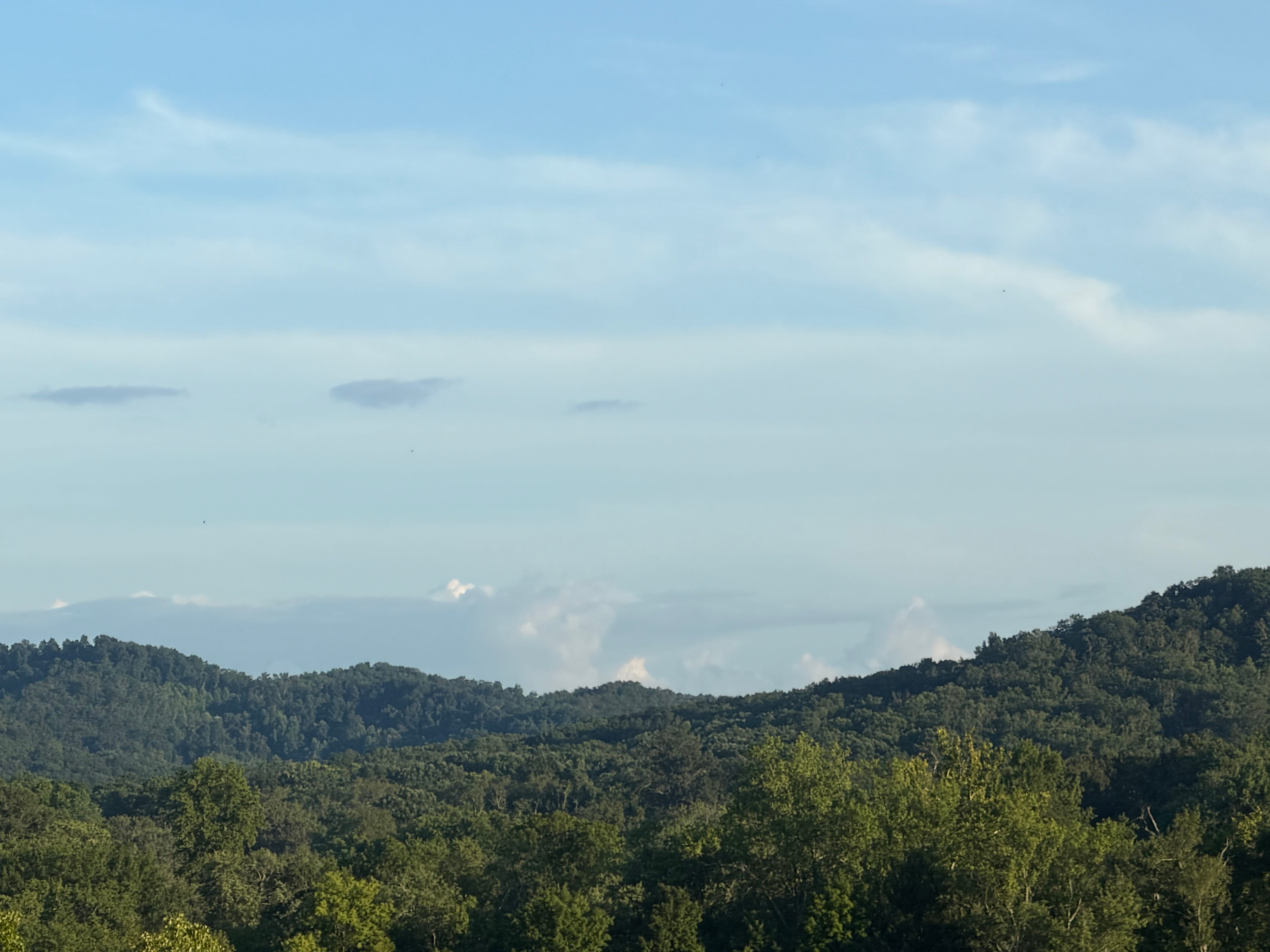
Tuesday
Living in Kentucky most of my life, I’d heard a great deal about Berea and especially Berea College.
“If you can afford to go there, you can’t go there.”
“You have to work full time and go to school full time.”
“They have an endowment as big as Harvard’s.”
As it turns out, none of those statements check out totally, but all contain a kernel or more of truth. The school covers tuition for students and all students must attend full-time. As one of 11 work-study colleges in America, all students must work, usually around 10-15 hours per week. And for a college that graduates about 1600 students per year, it does have a large endowment – well over $1.5 billion – but, uh, nowhere near Harvard’s.
I’d heard a lot but didn’t know much, and I’d never visited Berea. When the chance to attend a camp came to Cordelia, she jumped at it. And since she’s a day-student, I also get to enjoy Berea and learn about this singular place in Kentucky, Appalachia and America.
After dropping Cordelia at camp for the day, I parked in College Square and headed out for a walk. With temperatures set to hit the 90s, I ducked into the ample shade of the campus, with no agenda in mind. The buildings looked old – brick and limestone. It reminded me of Vanderbilt University, another place I visited for the first time recently. Both campuses appeared, at least on the outside, with a cohesive look in mind. Both had plentiful trees making for blessedly plentiful shade. Alas, soon I wanted to head uphill, toward what I was told was Chestnut Square, which required stepping into the blazing sun beating down on the asphalt and concrete. Passing the firehouse and other public buildings, I started feeling unwell. I needed food. At the top of the hill, I found Native Bagel Company, where I enjoyed a stellar sausage, egg and cheese on an everything bagel. The bagel shop closes in the early afternoon and turns into a more upscale restaurant – Nightjar Food. As I waited for my bagelly goodness, I had found it curious to see what sort of bagel shop exactly served Narragansett Beer on tap. Learning it serves dinner helps explain the tap a bit, but still – why a Rhode Island brewery found rarely in the South?
Revived with bagelly, sausagey and cheesy glory, I stepped back out into the unforgiving sun. Much of Chestnut Street appeared vacant. A grocery store seemingly long gone. An attorney who “no longer will accept clients as of May 1, 2023, and will retire as of December 31, 2023,” and who apparently will not remove written notices on the building until after July 14, 2026. A Mexican restaurant next to the library provided a potential heartbeat in the vicinity, if not exactly a spark.
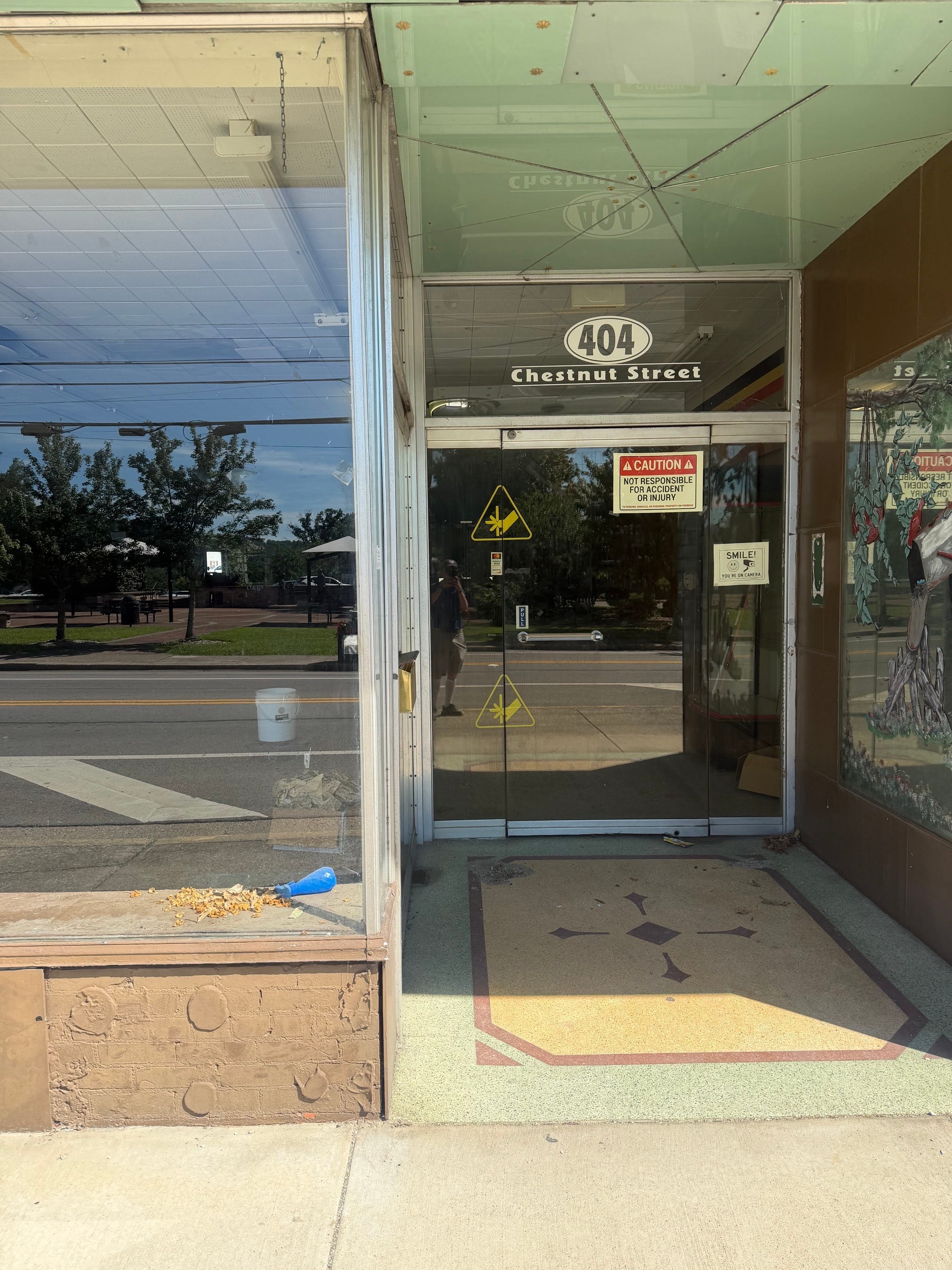
Almost everywhere I go, I seek out ye olde used bookstores, and ye olde Googley Maps informed me that one, by the name of Mary Lou’s Book Shop, approached. Figuring approximately 8 minutes in the heat was enough, I headed in. A young woman greeted me.
“Are you Mary Lou?”
“No, I wish I could own a bookshop, but I do enjoy working here.”
Her name was Ainsley and we gabbed for a bit about Jane Austen; what she was reading then -- The Lilac Girls, which she said was depressing, a report I recall my wife giving on it too; not reading D.H. Lawrence; and dining suggestions around town, including the aforementioned Native Bagel Company / Nightjar Food transformer. She offered me the names of previous good dining establishments, but, as expected, they hadn’t made it past Covid.
“We lost a lot of good things during Covid,” she informed me, looking down as she spoke.
Then I walked across to the Berea Hotel Building, Berea Welcome Center, L&N Visitor Depot, and The Cabin of Old Town Artisan Gallery. A gallery called Honeysuckle Vine had closed, adding to a sense of loss in town. Nice woodworking but admittedly nothing I couldn’t live without.
As I walked back toward the College Square, I recalled Ainsley mentioning that the Berea Fudge Shoppe sold good ice cream. That sounded yummy and needed today so I headed thattaway, right behind our hotel, The Historic Boone Tavern Hotel and Restaurant. The Fudge Shoppe treated me right, bulldozing a huge quantity of Mint Chocolate Chip into a styrofoam cup – colored, as the Lord Our God intended and revealed in the Gospels – Mint Green, not that bogus white nonsense. I enjoyed the creamy yumminess in the shade.
All in all, I’d walked nearly 5 miles, taking my time, enjoying meandering in a new locale for me. A delightful way to spend a summer day.

Wednesday
As much as I wanted to continue my explorations in Berea on foot, the weather predicted mid-90s weather — highest of the week — with clear skies and little cloud cover. So instead, I opted to visit the Battle of Richmond historic site nearby.
Abraham Lincoln said, “I hope to have God on my side, but I must have Kentucky.” The state did allow slaveholding but remained in the Union following the secession of the southern states in 1861. So the Union needed Kentucky for moral reasons, making the claim that even slaveholding states could remain loyally in the Union. Perhaps even more, Kentucky served as a key strategic gateway, north and south, and east-west. The Ohio River served as a main interior shipping highway. Kentucky also touches on the Mississippi River, perhaps the most strategically vital water artery of the war. The Louisville & Nashville Railroad provided a crucial link for cargo heading south. And control of Kentucky put the occupier on the front door of Virginia, and in the western side, awfully close to St. Louis, again on the Mississippi River.
For all its importance, few large battles occurred in the state, notably Perryville and its precursor, the Battle of Richmond. Fought on August 29-30, 1862, with skirmishes in the days beforehand, the Battle of Richmond ended in the Confederates overwhelming a mostly rookie Union force for a sweeping victory.
The Visitors Center was closed for repairs, but I read the battle overviews on the interpretive panels outside, spending over an hour soaking in sun that, for all the pummeling I felt, didn’t quite hit the high temperatures of those two days in August 1862. Temps climbed between 96F and 100F, and supplies of water ran short for both sides. I wore shorts, comfortable athletic shoes, and a sunshirt with a hood, and I still baked. Those soldiers wore all wool uniforms, often poorly fitting shoes, and let’s say the wicking technology was lacking.
I then headed to Battlefield Park up the road, where the first phase of the battle took place, near Pleasant View House, which still stands, and the old Mt. Zion Church, which remains intact and in-use today. The House included an interesting display of flags of the Civil War, mostly Confederate, but some Union and others used by both sides, as yellow flags were to denote hospital sites. The gift shop, a spin through which I rarely decline, leaned heavily Confederate. Outside, I strolled around the grounds, past the North Barn, offering a vista to a good deal of the battlefield to the north. The interpretive panels offered insight into how the days unfolded. One costly Union error was nearly undone when the Confederate artillery moved too far north too soon. Intriguingly, to me it seemed like the panels were written from the moral point of view of whichever side the panel was discussing. When commenting on the Confederate mistake noted above, it reads, “Fortunately, cooler heads quickly realized a mistake had been made and the battery withdrew south,” as if the reader was cheering for the Rebels. Similarly, the panels focused on the Union seemed, again to me, to use language indicating sympathy for that side. I doubt those word choices were haphazard. But whether the point was to foster seeing the war from both sides, or to subtly encourage the reader to cheer on his or her preferred side, I don’t know.
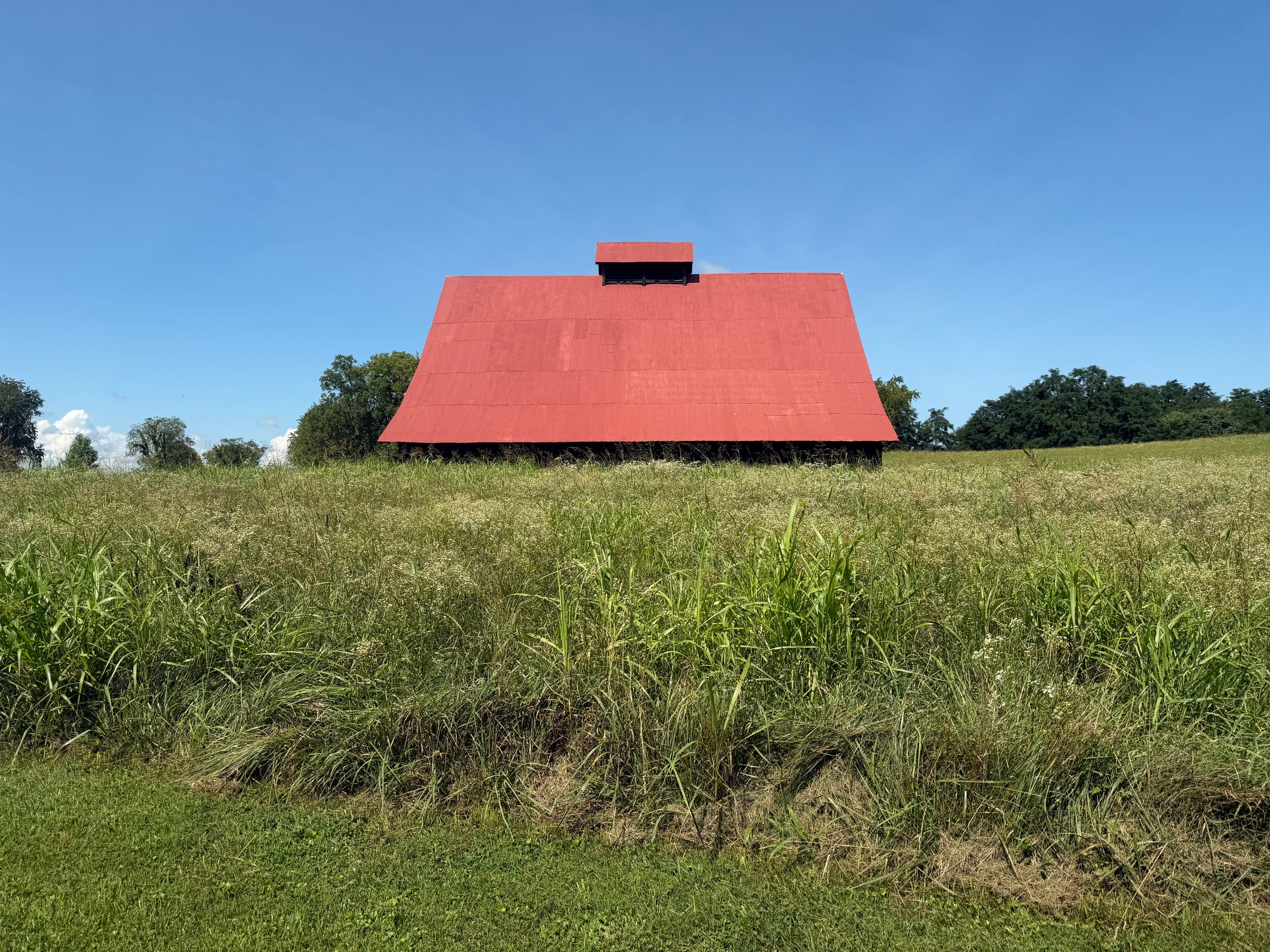
Richmond ended with a resounding Confederate victory. But five weeks later, at Perryville, the Confederates decided they couldn’t maintain the offensive into Kentucky. Cavalry raids would continue well into 1864, but after Perryville, no serious Confederate threat to Kentucky remained.
Again, I strolled under the blistering sun, wondering about those men — often boys — on those days. The Union troops at Richmond contained mostly raw recruits — barely a fortnight removed from the farm and family. They were soldiers in name and courage, yes, but not yet in skill and discipline. I thought about the sights I would have seen those two days. I thought about the cacophony of guns and cannons, screams and shouts. I especially considered the two senses that reading about war, and touring battlefields, can’t convey: smell and taste. Surely gunpowder burned their nostrils and throats and lungs. The smell of rotting, mangled human and horse flesh in the earthly skillet of battle plain.
I never would have forgotten, or gotten over, those smells.
Fatigued by real sun and imagined horror, I wanted to visit some place of solace. Shortly after the battle, six Sisters of Charity from Cincinnati, trained as nurses, encamped in the ara. For weeks, they tended the wounded and dying from both armies. They were angels of light working in darkness. I went to the final stop of the Battle of Richmond tour – St. Mark Catholic Church, and read of the deeds of these Sisters.
In them, I found hope for forgiveness and understanding.

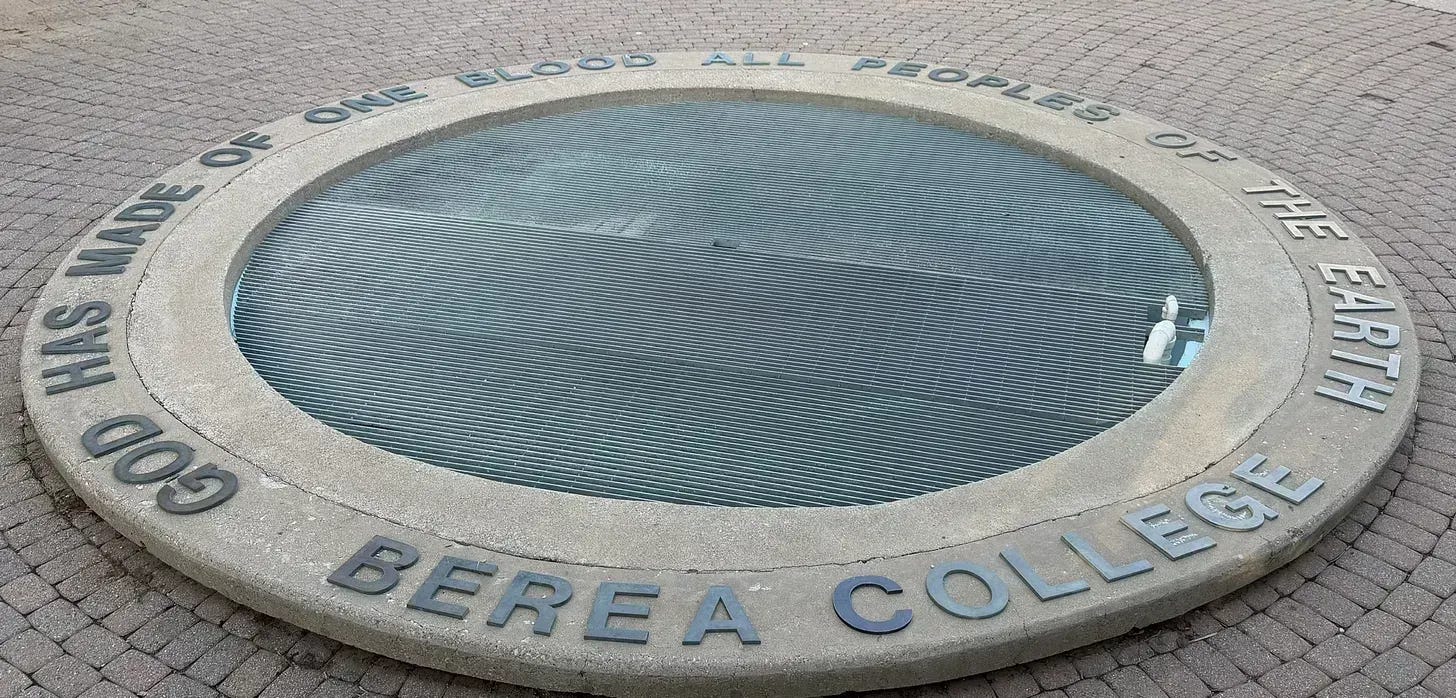
Two days. Two vastly different walking experiences, not even 15 miles apart. One, a walk through Berea College – a beacon of hope for generations of Appalachian, African-American and international students from over 70 countries (the college motto: “God has made of one blood all peoples of the earth”). But the hopes for the broader Berea community appeared mixed to me. I couldn’t decide whether Berea was growing or declining, but the words of Ainsley from the used bookstore came eerily to mind: “We lost a lot of good things during Covid.” The other walk amidst green fields once flooded with red blood. A war fought to reaffirm the motto of this strategically indispensable state, the motto of my home: “United We Stand, Divided We Fall.”
Thanks for taking us along on your walks!
OH... I love your walking posts and this was especially enjoyable. "Bagelly"....perfect description!